



Reading Kripke’s Wittgenstein: On Why a Guide Is Needed
This is a guest post by Ali Hossein Khani, author of Kripke’s Wittgenstein: Meaning, Rules and Scepticism
My first encounter with Kripke’s seminal book Wittgenstein on Rules and Private Language (1982) goes back almost two decades, when I was working on my master’s dissertation. On that first reading, the book struck me as relatively straightforward. I took Kripke simply to be offering yet another interpretation of Wittgenstein, according to which the later Wittgenstein, especially in the Philosophical Investigations (1953), advances an argument against the views he himself had defended earlier in the Tractatus Logico-Philosophicus (1921).
That understanding was not entirely mistaken, but it was crude. It was only after four years of careful work on the text with my PhD supervisor, Alex Miller, that I came to appreciate what Kripke is really doing in the book.
Kripke does far more than argue that the later Wittgenstein rejects certain central commitments of the early Wittgenstein. His interpretation, initially put forward in his late 1970s lectures, is distinctive in several respects. He reads Wittgenstein as advancing a constitutive sceptical challenge to traditional forms of realism about meaning and rule-following, while also proposing a solution that is itself sceptical, in a sense modelled on Hume’s treatment of causation and induction. On this interpretation, the famous Private Language Argument is a secondary, or better, a consequential, argument stemming from the sceptical solution, rather than an independent, self-standing one. Along the way, Kripke examines a wide range of crucial notions, including multiple candidate forms of realism (eleven, as I argue in the book), as well as those especially highlighted by Wittgenstein, such as language-games, forms of life, training, agreement within a community and the social character of use. In a Postscript, he also addresses Wittgenstein’s remarks on sensations and the problem of other minds, an aspect of the book that is often overlooked in the secondary literature, and which I discuss in detail.
A further complicating factor is the enormous body of secondary literature that Kripke’s book has generated over the past forty years. Almost every major philosopher of language and mind has engaged with it, typically in a critical spirit. Yet these discussions almost always proceed on the basis of substantial presuppositions about Kripke’s interpretation and the views discussed there. Engaging with them in a serious way requires a firm grasp of Kripke’s book itself, a text that is already dense and philosophically demanding.
Twenty years after my first reading of Wittgenstein on Rules and Private Language, and after more than fourteen years of sustained engagement with the book and its reception, I came to think that there was a genuine need for a guide. I wrote Kripke’s Wittgenstein with precisely that aim: to help readers understand the many dimensions of Kripke’s interpretation and to navigate the vast and often difficult literature surrounding it.
The book introduces Kripke’s interpretation step by step, covering the sceptical argument, the sceptical solution, the central notions involved in each and the discussion of other minds, while indicating where further treatments of these issues can be found. A substantial part of the book is devoted to critical responses to Kripke, including those by John McDowell, Simon Blackburn, Gordon Baker and Peter Hacker, Colin McGinn, Crispin Wright, Paul Boghossian, Philip Pettit, Alexander Miller, George Wilson, Scott Soames, Noam Chomsky, Paul Horwich and many others.
My hope is that this guide will help readers interested in Kripke and Wittgenstein, and more broadly in the philosophy of language and mind, to approach Kripke’s book with greater confidence – a now-classic work of analytic philosophy whose central themes remain as philosophically urgent today as they were when Kripke first published it.
Latest Posts

Talk of the Town: Monthly Publishing Industry News Digest
As September draws to a close, the publishing industry continues to explore new connections between books, technology and audiences. From AI’s growing influence on academic writing and peer review to...
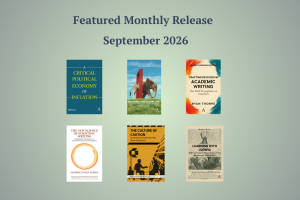
Featured Monthly Releases – September 2026
As September closes, discover new titles that explore writing, media, music, life and economics from fresh interdisciplinary perspectives. Our featured releases offer thought-provoking approaches to academic communication, cultural experience and...
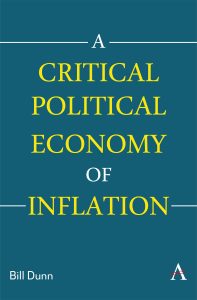
Towards a Critical Political Economy of Inflation
This is a guest post by Bill Dunn, author of Critical Political Economy of Inflation Inflation is back in the news. And it deserves attention. It is economically but also...
Talk of the Town: Monthly Publishing Industry News Digest
As August comes to a close, the publishing industry continues to balance strong traditional markets with rapid technological change, as AI reshapes discovery and scholarly communication while questions of research...