



The Amendments to the Constitution, a pathway to the American experience
This is an interview with Blaine Kaltman, author of Perfecting the U.S. Constitution: 27 and Counting, The Amendments that Shaped America’s Future
Q. What made you decide to write a book about the Amendments to the U.S. Constitution?
Dr. Kaltman: Because it is a very interesting topic that too often is buried in legal jargon. My book is an easy read for the common person, not a lawyer or legal scholar. I tell the story of each Amendment, why it was adopted, how it has been interpreted and the role it has played in shaping American society. This is the knowledge that every American should have in order to understand the political history of the United States and address today’s pressing political questions.
Q. That all sounds nice, but isn’t the story of why each Amendment was adopted and how it’s been interpreted by the courts a dull slog through old historical records?
Dr. Kaltman: Quite the contrary. Despite the serious nature of the subject, this is a fun easy read because it relates interesting, in some cases even fascinating, instances and anecdotes. For example, I tell how a letter from his mother convinced a young member of the Tennessee House of Representatives to vote in favour of ratifying the Nineteenth Amendment granting women the right to vote. One of my favourite stories is about Clarence Earl Gideon, a man with an eighth-grade education who sent a letter hand written in pencil to the U.S. Supreme Court. He appealed his conviction for robbing a poolroom on the grounds that the trial judge had refused to appoint an attorney to represent him. The Supreme Court heard his case and Gideon’s conviction was overturned. The Court ruled that the Sixth Amendment right to an attorney was ‘fundamental’ and must be provided by the government if the defendant cannot afford to hire their own. The letter that ensured the Sixth Amendment right to counsel to all on U.S. soil is on display at the Rubenstein Gallery at the National Archives.
Q. In writing this book why didn’t you follow the standard approach and discuss each Amendment in the chronological order in which they were ratified?
Dr. Kaltman: I believe that organising by topic makes for a much more interesting and easier to understand coherent read. If I had written about the Amendments in chronological order, the reader would have had to jump back and forth in order to follow certain historical threads. For example, there are four Amendments passed at different times that deal with the Presidency: the Twelfth, Twentieth, Twenty-Second and Twenty-Fifth. Over time, these amendments changed how our President and Vice President are elected, limited their term of office and provided for their succession in the event of a vacancy. It made simple sense to group these amendments together.
Q. Is this book important and how is it relevant in today’s world?
Dr. Kaltman: The answer is simple. Just follow the daily news. The book addresses current topics such as cases before the Supreme Court and challenges our system of government is facing right now. For example, my book discusses the history of Amendments concerning birthright citizenship, abortion, the deployment of Federal troops on U.S. soil and whether Donald J. Trump is eligible to serve a third term as President. The Amendments aren’t cut and dried historical documents. They are the bulwarks that protect the individual liberties that Americans enjoy.
Q. Prior to agreeing to publish this book, Anthem sent it to several reviewers. What did you learn from their comments?
Dr. Kaltman: The reviews were very helpful. Professor Forrest Maltzman suggested additional material that I incorporated. What I found gratifying was that all the reviewers found that the subject matter was important and that the book was an easy and entertaining read.
Latest Posts

Talk of the Town: Monthly Publishing Industry News Digest
As September draws to a close, the publishing industry continues to explore new connections between books, technology and audiences. From AI’s growing influence on academic writing and peer review to...
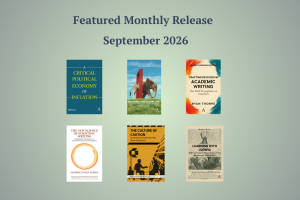
Featured Monthly Releases – September 2026
As September closes, discover new titles that explore writing, media, music, life and economics from fresh interdisciplinary perspectives. Our featured releases offer thought-provoking approaches to academic communication, cultural experience and...
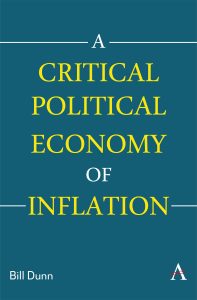
Towards a Critical Political Economy of Inflation
This is a guest post by Bill Dunn, author of Critical Political Economy of Inflation Inflation is back in the news. And it deserves attention. It is economically but also...

Talk of the Town: Monthly Publishing Industry News Digest
As August comes to a close, the publishing industry continues to balance strong traditional markets with rapid technological change, as AI reshapes discovery and scholarly communication while questions of research...