



Deep Dives into Persistent Paradoxes
This is an interview with Lou Marinoff, author of Paradoxes of Rationality, Probability and Utility
Interviewer: Your book is subtitled “Slaying Decision Theory’s Dragons.” What are these “dragons,” and why must they be slain?
Author: The “dragons” are persistent paradoxes and dilemmas that have haunted decision theory for decades—such as Bertrand’s Random Chord Paradox, Elga’s Sleeping Beauty Problem, and the Two Envelopes Paradox (variously from Kraitchik, Shrödinger, and Nalebuff). These are not merely intellectual curiosities; they represent fundamental challenges to our understanding of reason. My goal is to show that many of these supposedly “unresolvable” problems actually arise from specific misapplications of logic or probability, such as the Principle of Indifference. By exposing these errors, we “slay” the paradoxes and clear the way for both deeper understanding and no doubt future paradoxes.
Interviewer: You’ve spent decades studying the Prisoner’s Dilemma (PD). What is the most significant misconception people have about it?
Author: The biggest myth is that there is a single “best” strategy independent of the environment. While strategies like Rapaport’s Tit-for-Tat are elegant, my research shows they are not evolutionarily stable in the way many believe. Contra Axelrod and Hamilton, I’ve proven that no computable strategy is strictly evolutionarily stable in the iterated PD. This means that in any PD-type of strategic environment, any given policy or social strategy cannot be guaranteed not to fail.
Interviewer: In Chapter 2, you discuss “Maximizing Expected Utilities” (MEU) as a strategy. How does it fare against the legendary Tit-for-Tat?
Author: In my computer experiments, a strategy that maximizes expected utility with a high initial cooperative disposition actually outperformed the field. However, it has a “fatal flaw”: when it meets its own twin, they may misidentify each other as exploitable, leading to mutual defection. It’s a counter-intuitive case where a strategy that succeeds in a diverse population can also fail when it becomes too prevalent.
Interviewer: You address the “Tragedy of the Coffeehouse.” How does this differ from the well-known Tragedy of the Commons?
Author: While Hardin’s Tragedy of the Commons involves depleting a resource, the “Coffeehouse” tragedy involves failing to derive benefit from one. It illustrates the phenomenon of what I term “costly riding,” in contrast to Petit’s “free riding.” My experiments showed that people often act irrationally even (if not especially) when their fallacious reasoning is revealed to them. They persist in expressing a “collective irrational preference” for an unattainable “best” outcome, which ultimately leads to the worst possible result for everyone. This holds obvious negative implications for “utopian” ideologues.
Interviewer: One of your chapters discusses highway robbery through the lenses of Hobbes, Spinoza, and Kant. Who has the best advice for someone facing a robber?
Author: That depends on your priorities! Hobbes and Spinoza offer divergent yet self-interested justifications for lying to a robber to escape, whereas Kant famously argues that you can’t lie at all. I introduced a hypothetical philosopher named “Kan” who can lie, for her own inimitable reasons. My humorous conclusion? Robbers should avoid abducting philosophers.
Interviewer: You argue that the “Strong AI” thesis is flawed. How did a poem like Lewis Carroll’s “Jabberwocky” help you reach that conclusion?
Author: I used “Jabberwocky” to conduct a “reverse Turing Test,” which assesses not how well computers imitate humans; rather how poorly humans can be at imitating computers. Computers execute instruction sets precisely, while humans frequently misunderstand them. Since computers are incapable of misunderstanding instructions, misunderstanding is not Turing computable. But in that case, neither is understanding! This argument predates the emergence of large-language models, and thus predicts their inability to think “humanly.”
Interviewer: What is the final message you want readers to take away from this collection?
Author: I want readers to realize that failure in problem-solving is often a more informative teacher than success. The journey through these paradoxes and dilemmas helps us refine our own ratiocinations. I hope this anthology sparks a sense of curiosity and encourages others to keep “meandering” through the exotic landscape of human mentation.
Latest Posts
Talk of the Town: Monthly Publishing Industry News Digest
As July comes to an end, the publishing sector continues to respond to rapid technological change, shifting research priorities and renewed conversations around open access, publishing quality, academic resilience and...
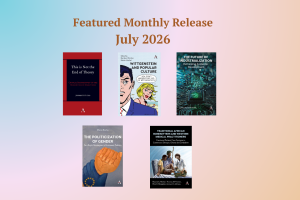
Featured Monthly Releases – July 2026
This July, explore a collection of thought-provoking new titles that address philosophy, politics, healthcare, culture and sustainable development. Our featured releases offer fresh perspectives on some of today’s most pressing...

How Gender Became a Political Weapon for the Far Right
This is a guest post by Maria Barbu, author of The Politicization of Gender In 2016, the election of Donald Trump did more than disrupt American electoral politics. It redefined...
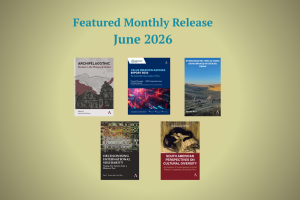
Featured Monthly Releases – June 2026
This June, discover new titles that explore the intersections of culture, society and global transformation. Spanning decolonisation, sustainability, philosophy, regional studies and public policy, these latest releases offer timely perspectives...