



Why do we choose VR for art when AI has ‘won’ the Nobel Prize?
This is a guest post by Xinyang Zhao, author of Digital Immersive Art in China
The year 2024 has not been the dawn of artificial intelligence (AI), but it is already a year of great acclaim for it. This year, all three Nobel Prizes in the sciences – Physiology or Medicine, Physics and Chemistry – were awarded, with the latter two going to scientists in the field of AI. Many people exclaimed that AI has become the biggest winner of the Nobel Prize in 2024!
As global competition accelerates for the latest innovations in technology, attention is heavily focused on generative artificial intelligence (GAI) and the high-end computer chips needed to power the next generation of technologies. The capacity of large language models (LLMs) to generate instant narratives opens a ‘Pandora’s box’ of GAI, raising challenges for human creativity. Meanwhile, the experience of virtual reality (VR) has demonstrated that the power of storytelling remains critical and that there is still a role for human-generated content – and artists.
In 2023, when I returned to China, I caught up with my friend Jiasheng Huang, the founder of a VR start-up, at the Shanghai International Film Festival. He had brought his new work, a VR calligraphy gallery in collaboration with the Chinese artist Boyan, to participate in the film festival. He shared that his career in VR art suffered a significant setback during the COVID-19 lockdown. With the emerging idea of metaverse, he secured a fresh round of venture capital. He expresses great joy in being able to showcase Chinese culture on the global stage and remains determined to pursue his VR dream despite the challenges he faces.
For entrepreneurs like Huang, VR is not just a technology; it is also a means of expressing artistic creativity. In the eyes of many progressive thinkers in China, the integration of technological innovation and cultural creativity would allow the former to upgrade culture. Tech companies have capitalised on this trend by applying technologies and platforms to represent Chinese culture. It involves both entrepreneurial spirit and a vision of using digital technology to upgrade Chinese culture and reach global audiences – a kind of techno-cultural imaginary. This imaginary enhances the confidence of its culture domestically and is also changing the world’s perception of a developing China.
However, AI now poses a new frontier that challenges human creativity. Not long after Apple launched the Vision Pro, a later advertisement for an Apple iPad depicted paint, a piano and a camera lens being mechanically crushed by the forces of AI, symbolising the destruction of professionals’ creativity by AI. This led to an uproar among the creative community worldwide, forcing Apple to withdraw the advertisement.
VR and AI are not opposing forces; intelligent algorithms can be applied in VR creation to enhance efficiency and optimise the feeling of immersion. The combination of the two may provide new insights into how humanity can better harness digital technology.
Latest Posts
Talk of the Town: Monthly Publishing Industry News Digest
As September draws to a close, the publishing industry continues to explore new connections between books, technology and audiences. From AI’s growing influence on academic writing and peer review to...
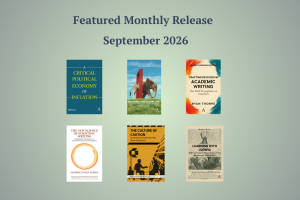
Featured Monthly Releases – September 2026
As September closes, discover new titles that explore writing, media, music, life and economics from fresh interdisciplinary perspectives. Our featured releases offer thought-provoking approaches to academic communication, cultural experience and...
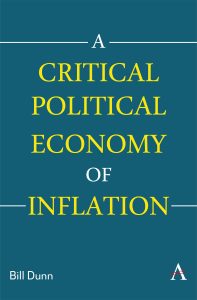
Towards a Critical Political Economy of Inflation
This is a guest post by Bill Dunn, author of Critical Political Economy of Inflation Inflation is back in the news. And it deserves attention. It is economically but also...
Talk of the Town: Monthly Publishing Industry News Digest
As August comes to a close, the publishing industry continues to balance strong traditional markets with rapid technological change, as AI reshapes discovery and scholarly communication while questions of research...