



The key to reducing violence lies in our cultures
This is a guest post by Marty Branagan, author of The Cultural Dimensions of Peacebuilding
Most of us – maybe even arms dealers – want to live in peace and safety. Yet violence is in epic proportions, particularly towards women, producing widespread fear and despair. Should we rely on governments and the United Nations to provide solutions? Or are the causes – and solutions – closer to home, in our cultures, thoughts, words, behaviours and everyday life?
Massacres by military forces or terrorists, school shootings, rapes, murders, knife attacks – all are underpinned by cultural violence, where aspects of our cultures support violence (e.g., in violent movies, language, parenting, education, patriarchy and war journalism). Politicians repeatedly urge us to ‘change the culture’. But what exactly does this mean, and how can it be achieved? And don’t governments send mixed messages when they spend far more on nuclear submarines, weapons and fighter planes than violence prevention?
This optimistic, solutions-oriented, innovative book (released on 8 October) by an academic/artist/activist details how cultural violence embeds fears and militaristic narratives in our psyches. Each aspect, alone, seems insignificant, but they add up. However, they can be transformed at grassroots level by ordinary people to create more peaceful cultures. The power to reduce violence is in our hands and TV remotes.
‘Come and see the violence inherent in the system’, says a grubby but politically aware peasant in Monty Python’s ‘Holy Grail’ movie. Most societies are drenched in cultural violence, and we are often unconsciously complicit in it.
- 90% of movies contain violence. They often glorify weapons and make people more fearful and likely to accept the narrative, pushed by the military–industrial complex and the media outlets it controls, that armed violence is necessary to protect ourselves. Some films, however, have no violence and even anti-violence themes.
- Histories and museums can glorify war and patriarchy, or commemorate effective nonviolent movements such as the suffragists.
- The military–industrial complex is gaining influence in universities and schools. Peace education, peace journalism and artistic artivism, although far less wealthy or politically connected, attempt to counter this influence.
- Our language is filled with violent terms, such as ‘to kill two birds with one stone’, which could instead be ‘feed two birds from one bowl’.
- Parenting and education can lead to damaged mass murderers like Stalin and Hitler, or empowered, critical-thinking, nonviolent citizens.
- Peaceful cultures already exist throughout the world, ranging from small Indigenous communities to whole regions of relative peace. We can learn from their example that peace is possible.
- War and militarism are gendered, and impact disproportionately on women, children, the elderly and less abled. Women often lead successful nonviolent movements but gain little recognition or resourcing.
- Religions can divide or bring people together in peace, tolerance and compassion. Inner peace can also be found through practices like yoga and meditation, and provide a foundation for broader peace.
Wars and violence are neither inevitable nor an inherent part of human nature. Through understanding cultural violence and how it supports direct violence, we can transform our beliefs, choices and behaviours to cultivate a more peaceful world from the ground up.
Latest Posts

Talk of the Town: Monthly Publishing Industry News Digest
As September draws to a close, the publishing industry continues to explore new connections between books, technology and audiences. From AI’s growing influence on academic writing and peer review to...
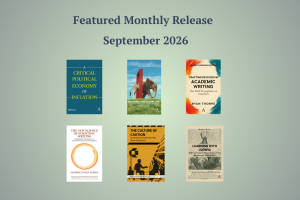
Featured Monthly Releases – September 2026
As September closes, discover new titles that explore writing, media, music, life and economics from fresh interdisciplinary perspectives. Our featured releases offer thought-provoking approaches to academic communication, cultural experience and...
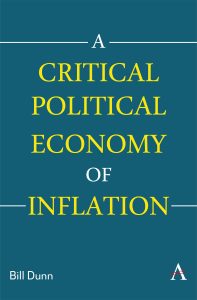
Towards a Critical Political Economy of Inflation
This is a guest post by Bill Dunn, author of Critical Political Economy of Inflation Inflation is back in the news. And it deserves attention. It is economically but also...

Talk of the Town: Monthly Publishing Industry News Digest
As August comes to a close, the publishing industry continues to balance strong traditional markets with rapid technological change, as AI reshapes discovery and scholarly communication while questions of research...