



University Press Roundup: Colonial Legacy, the Post-Fact Age and Election Season Books
Check out this collection of 8 of the most interesting university press blog posts for this week. We aim to keep you informed, engaged, and part of the ongoing scholarly conversations.
1. Statues are falling but their colonial legacy is killing the planet 
This summer, the Black Lives Matter protests drew attention to key colonial figures, and the business models that they represent. Whilst Coulston’s statue may be at the bottom of Bristol Dock, the joint-stock model of the corporation he ran is still very much alive, and it’s threatening all life on earth. (Manchester University Press)
2. What it’s like to be a black republican in 2020
In the run up to the presidential election, Corey D. Fields, author of ‘Black Elephants in the Room’, reflects on how the face of black conservatives has shifted under the Trump administration. Read more about the ‘sellout critique’ and the ‘skeptical embrace’ here. (University of California Press)
3. Why Business Strategy needs to be Flexible Now More Than Ever
In these very unusual times, a traditional business strategy approach becomes difficult to maintain. David MacKay explores the benefits of a flexible process and the way in which it “offers new means by which the relevance and completeness of strategic decisions might be maintained, and the organisation readied for implementation work”. (Oxford University Press)
4. Visual Culture and the Climate Crisis
Lucas Hilderbrand and James Nisbet discuss the intersections of visual culture and the climate crisis. In an interesting and timely conversation they ask how you sustain scholarship in a field which is responding to climate emergency? Find out more about the visual work they’re excited about here. (University of California Press)
5. The Slippery Slope of the Human Gene Editing Debate 
The human gene editing debate began sixty years ago, when eugenicist scientists wanted to use altered genes to “perfect the human species”. The debate is a slippery slope – at what point does morally ethical work, such as removing diseases, turn into an attempt to alter the human race? (Oxford University Press).
6. The post-fact age: How to teach news literacy
Kirsten Sutton provides practical tips on how to help children differentiate between fact and fiction in the FAKE NEWS era. Ensuring they understand the importance of checking for the source, the author, references and other tell-tale signs is key. Read about it here. (Cambridge University Press)
7. Noelle McAfee on our paranoid politics
In a guest post for Columbia University Press, Noelle McAfee, author of ‘Fear of Breakdown’, analyses the current state of US politics, describing how the problem lies in “a mindset that is predisposed to latch on to delusions of persecution”. (Columbia University Press)
8. Election Season Books 
In the run-up to the 2020 presidential election Stanford University Press have collated a list of must-read books which focus on voting, politics, history, rights, law, and social movements. Find out what should be on your bookshelf this month here. (Stanford University Press)
Latest Posts
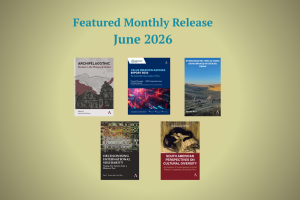
Featured Monthly Releases – June 2026
This June, discover new titles that explore the intersections of culture, society and global transformation. Spanning decolonisation, sustainability, philosophy, regional studies and public policy, these latest releases offer timely perspectives...

Talk of the Town: Monthly Publishing Industry News Digest
As we close the curtains on June, the publishing industry continues to navigate the accelerating influence of AI, advances in open access and sustainability and ongoing debates surrounding academic freedom,...
Cultural Diversity After the Crisis of the Rules-Based Order
This is a guest post by Federico Luis Escribal, author of South American Perspectives on Cultural Diversity: An Analysis of Contemporary Cultural Policies in Argentina, Brazil and Peru The beginning...
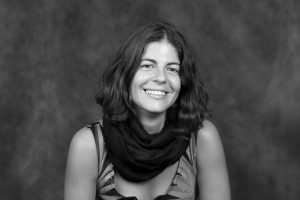
Recovering the Voice of Maria Teresa de Sá Nogueira: A Conversation with Sandra Sousa
This is an interview with Sandra Sousa, author of The Life and Writings of Maria Teresa de Sá Nogueira What inspired you to write The Life and Writings of Maria...