



University Press Roundup: Students and the 21st Century Job Search, Remembering Hiroshima and Cultural Canons
Check out this collection of 8 of the most interesting university press blog posts for this week. We aim to keep you informed, engaged, and part of the ongoing scholarly conversations.
1. How to prepare students for jobs in the 21st century

After analyzing 142,000 job advertisements, the Educational Testing Service has identified the following highly requested “21st century skills”: oral communication (28%), written communication (23%), collaboration (22%), and problem solving (19%). How can higher education incorporate these cognitive, interpersonal, and intrapersonal skills into their courses? (Oxford University Press).
2. Independent Publishing in India – The Story of Tulika Books
Columbia University Press celebrates Tulika Books’s 25 years of independent publishing from a broad left and democratic perspective and producing cutting-edge scholarship. As an influential member of India’s growing publishing scene, Tulika is committed to innovation and believes in taking risks.
3. What Does a Strong Book Proposal Look Like? Editor Maura Roessner Takes Out the Guesswork
Need help constructing your book proposal? There’s resources here! In this video, UC Press Senior Editor Maura Roessner offers guidance that is invaluable for authors at any stage of their careers. Here she demystifies the academic publishing process, revealing what kind of manuscripts academic presses are looking for (University of California Press).
 4. Remembering Hiroshima
James L. Nolan, Jr. remembers the 75th anniversary of the atomic bombing of Hiroshima in this excerpt from his book Atomic Doctors: Conscience and Complicity at the Dawn of the Nuclear Age, an unflinching examination of the moral and professional dilemmas faced by physicians who took part in the project (Harvard University Press).
5. What Is the Point of Literary Criticism?
There are many ongoing debates on how one should engage in literary interpretation. However, Patrick Fessenbecker moves to a more fundamental question: What is the point of literary criticism? Why does this practice merit the sustained intellectual energy so many scholars have devoted to it? (Edinburgh University Press).
 6. What Kind of Life Are We Saving?
Bernard-Henri Lévy considers how quarantine and global stay-at-home orders have changed the meaning of life in this excerpt of his new book, The Virus in the Age of Madness (2020) and quotes Little Red Riding Hood: “Beware the open road; there lie big, bad wolves—stay home” (Yale University Press).
7. How we decide on cultural canons
Many different canons exist, from literary, film, art, music, and religion; and they change over time as humanity attempts to preserve and transmit its cultural memory. But who chooses what will be included in the canon? When is this selection made? What is valued in order to make something canonical? Theodora A. Hadjimichael looks for answers from the most stable of the literary canons of ancient Greece (Oxford University Press).
 8. International Day of the World’s Indigenous Peoples
Duke University Press celebrates International Day of the World’s Indigenous Peoples on August 9 with a roundup of recent scholarship in Indigenous studies, from speculative fiction to reinvented travel guides.
Latest Posts
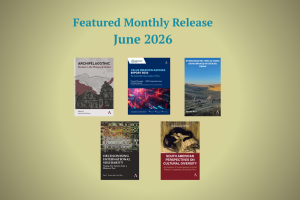
Featured Monthly Releases – June 2026
This June, discover new titles that explore the intersections of culture, society and global transformation. Spanning decolonisation, sustainability, philosophy, regional studies and public policy, these latest releases offer timely perspectives...

Talk of the Town: Monthly Publishing Industry News Digest
As we close the curtains on June, the publishing industry continues to navigate the accelerating influence of AI, advances in open access and sustainability and ongoing debates surrounding academic freedom,...
Cultural Diversity After the Crisis of the Rules-Based Order
This is a guest post by Federico Luis Escribal, author of South American Perspectives on Cultural Diversity: An Analysis of Contemporary Cultural Policies in Argentina, Brazil and Peru The beginning...

Recovering the Voice of Maria Teresa de Sá Nogueira: A Conversation with Sandra Sousa
This is an interview with Sandra Sousa, author of The Life and Writings of Maria Teresa de Sá Nogueira What inspired you to write The Life and Writings of Maria...