



Representing Appalachia
This is a guest post by Sarah Robertson, author of Gothic Appalachian Literature
‘Backwards’. ‘Hillbillies’. ‘Trash’. You’ve heard them all before: the derogatory labels commonly bandied about when discussing Appalachia. In 2016, Appalachia became the nation’s boogey monster once again, an othering spearheaded by two figures on the political right. Significantly, Donald Trump’s 2016 successful run for President led to the castigation of Appalachia as ‘Trump Country’, the region blamed for carrying the 45th President to the White House, with states including Tennessee and West Virginia widely scorned by the progressive media.
The year 2016 also saw the liberal media’s embrace of JD Vance’s Hillbilly Elegy (2016). New York Times bestseller Vance was heralded as the next great spokesperson for Appalachia and the working class. Why was this book so popular? In short, Vance gave readers a version of Appalachia that already existed in their minds, repeatedly serving up recognisable stereotypes that have long circulated in the popular imagination. As many Appalachian critics have shown, Vance’s best-selling memoir was not a handbook to the disenfranchised White working-class but instead a stereotyped and reductive take on poverty, welfare and addiction.
In Hillbilly Elegy, venture capitalist Vance showed he was neither a champion of the working class nor Appalachia. As I explore in Gothic Appalachian Literature, if you want to understand Appalachia in all its complexity, then look no further than the region’s authors and poets who, even in the searingly dark and often unforgiving spaces of the gothic, present more honest insights into Appalachia than Vance’s memoir. They also work significantly harder to represent the people of the region than Donald Trump. Indeed, in what I label the post-Trump moment in Appalachia literature, many of the region’s writers have some choice words to say about the 45th President, including his politics and his policies.
I am a U.K. academic, so you may well ask; how can I speak for Appalachia any more convincingly than Vance? I don’t proclaim to speak for Appalachia, but rather to have listened to what the region’s authors, poets and scholars say about the place and its people. Reading Appalachian literature reveals the multitudinous contours of the place, from rural communities to cities, from drug epidemics and extractive industries to those fighting back against these blights, from racism to immigration, and from sexual conservatism to LGBTQ+ rights.
In Gothic Appalachian Literature, I cover a wide range of the most significant and emerging authors and poets who draw on the gothic to dispel the monstrous preconceptions of the region and show the real horrors that arise for those living in an economic and environmental sacrifice zone. From Cormac McCarthy to Chris Offutt, from Frank X Walker to Annette Saunooke Clapsaddle, from Ann Pancake to Rahul Mehta, and so many more, contemporary Appalachia writers have much to contribute to the definitions of Appalachia and its role in the national imaginary.
Latest Posts

Talk of the Town: Monthly Publishing Industry News Digest
As September draws to a close, the publishing industry continues to explore new connections between books, technology and audiences. From AI’s growing influence on academic writing and peer review to...
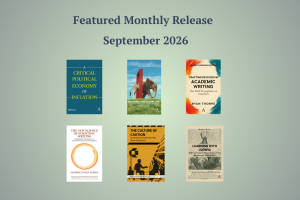
Featured Monthly Releases – September 2026
As September closes, discover new titles that explore writing, media, music, life and economics from fresh interdisciplinary perspectives. Our featured releases offer thought-provoking approaches to academic communication, cultural experience and...
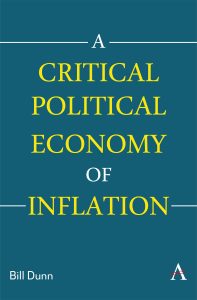
Towards a Critical Political Economy of Inflation
This is a guest post by Bill Dunn, author of Critical Political Economy of Inflation Inflation is back in the news. And it deserves attention. It is economically but also...

Talk of the Town: Monthly Publishing Industry News Digest
As August comes to a close, the publishing industry continues to balance strong traditional markets with rapid technological change, as AI reshapes discovery and scholarly communication while questions of research...