



Timeless Writing in an Academic World
The academic field is always evolving and changing. New ideas and concepts are frequently being introduced and, as a result, textbooks with the most up-to-date information are in demand. The academic publishing industry has responded to this need and new texts are constantly being published. These days, professors and students have more options than ever to pursue their studies.
However, in the haste and urgency of it all, many textbooks get lost in the queue or their shelf life is far too brief when compared to the amount of time and energy put in by the scholars who write them. The concern is then: how do you write a textbook that not only gets noticed but remains relevant and useful beyond the first years of its publication?
For almost 10 years now, Walter G. Moss’s book, ‘A History of Russia (Vol I)’ has been used in classrooms throughout the US. In fact, just this semester a professor made it a required reading text for a Russian history course at Harvard University. So, with almost a decade of success, we asked him why he thought his book has prospered over the years.
Dr Moss provided the following reasons:
- It is well written and organized with the average student in mind
- It deals with a wide variety of topics: e.g., the role of women and numerous nationalities in the Russian/Soviet empires, everyday rural and urban life, law, religion, literature, art, popular culture, references to varying historical perspectives
- It provides numerous additional features such as illustrations and maps, fully updated bibliographies accompanying each chapter as well as a general bibliography, a glossary, and chronological and genealogical lists
Additionally, Andrew Gentes, a lecturer in Russian and European History at University of Queensland, said that Dr Moss’ book ‘manages to embrace a wide range of topics while at the same time remaining accessible and interesting…Balances humorous anecdotes with provocative concepts, and discusses historiography in a clearer and more contemporary fashion than that found in Riasanovsky’s ‘A History of Russia’, now in its sixth edition and looking a bit musty by comparison…There is little to fault with this volume.’
History texts naturally lend themselves to a longer shelf life, as opposed to other more time-sensitive subject matters such as digital media, business marketing, or contemporary scientific theory. But what makes a good book remains the same at its core. If you can capture that essence, it too will stand the test of time.
Read more about the ‘A History of Russia (Vol I)’ here and/or check out Vol II, here.
Latest Posts
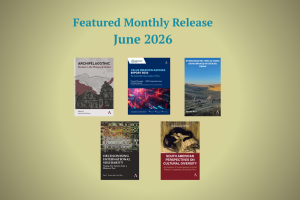
Featured Monthly Releases – June 2026
This June, discover new titles that explore the intersections of culture, society and global transformation. Spanning decolonisation, sustainability, philosophy, regional studies and public policy, these latest releases offer timely perspectives...

Talk of the Town: Monthly Publishing Industry News Digest
As we close the curtains on June, the publishing industry continues to navigate the accelerating influence of AI, advances in open access and sustainability and ongoing debates surrounding academic freedom,...

Cultural Diversity After the Crisis of the Rules-Based Order
This is a guest post by Federico Luis Escribal, author of South American Perspectives on Cultural Diversity: An Analysis of Contemporary Cultural Policies in Argentina, Brazil and Peru The beginning...

Recovering the Voice of Maria Teresa de Sá Nogueira: A Conversation with Sandra Sousa
This is an interview with Sandra Sousa, author of The Life and Writings of Maria Teresa de Sá Nogueira What inspired you to write The Life and Writings of Maria...