



The Rejection of Power: Nonviolence and the Grand Inquisitor
This is a guest post by Alexei Anisin author of Nonviolence and the Grand Inquisitor
Silence fills a cold dungeon cell in 15th-century Seville. Outside, the Inquisition is raging – the public square carries the smell of smoke of bodies that were burned in the name of a politically rooted religious order. Inside, Christ stands before the Grand Inquisitor, who accuses Him of burdening humanity with freedom that it could never bear. The Inquisitor speaks at length. He explains how humanity succumbed to the three temptations of bread, miracle and authority. Christ says nothing.
This silence is not a weakness. It is a profound response Dostoevsky gives to problems associated with political coercion and power. In The Brothers Karamazov, the chapter and parable of the Legend of the Grand Inquisitor have historically been read and interpreted as an intense and provocative meditation that intersects between human nature, authoritarianism and political power. Yet one of its most important dimensions has received far less attention – the role of nonviolence. Christ does not refute the Inquisitor through argument. He remains meek and kisses the Inquisitor, a gesture that carries overlooked spiritual and political meanings.
The parable is focused on the three temptations of bread, miracle and power. Bread represents the promise of material security and the adversities that have historically arisen when human societies positioned the satisfaction of economic needs over spiritual and moral struggle. Miracle represents the spectacle of certainty and the desire for grand displays that can relieve people of doubt. Power represents the capacity to rule, command and force humanity into stable and predictable political orders. The Inquisitor believes Christ was wrong to reject these temptations in the desert of Jericho – as this placed too heavy of a burden on humanity. The Inquisitor argues that people do not want freedom; they want security and material sustenance. Yet, Christ refuses the impulses that deeply govern human life and through this refusal, Dostoevsky paints a vivid picture of freedom that necessitates freedom from compulsion, fear, dependency and the desire to dominate others.
Political outcomes in modern history have repeatedly confirmed the force of the accusation that the Inquisitor laid upon Christ. Societies have often traded liberty for comfort and moral responsibility for institutional management. Spiritual struggle has too often been manipulated for the sake of ideological spectacles. Political authorities have promised order and have committed the worst of atrocities in pursuit of it. Vice versa, revolutionaries have promised liberation. More recently, technocratic actors and systems are starting to promise solutions to ease suffering through increased expertise and control. Across different political contexts, the temptations play similar empirical functions. Dostoevsky’s parable provides a nonviolent answer to the temptations that is radically different than what is often articulated in social and political theory on nonviolence. Christ’s nonviolence constitutes interior discipline and a refusal to engage with the thought of retaliation. Nonviolence denies the Inquisitor the satisfaction of conflict. His kiss refuses the logic of punishment. This rejection of power preserves the possibility of love without coercion. These dynamics, albeit mostly theoretical, matter greatly for contemporary discussions of nonviolence because much scholarship assumes nonviolent action is a causative strategy for political success. Dostoevsky leads us to reflect over whether nonviolence can also be a spiritual form of resistance against the very desire to rule. In a world marked by political warfare and technological control, these questions remain alarmingly significant.
Latest Posts

Becoming Into Others in Rapidly Changing Times
This is a guest post by Ana Laura Arellano, Jorge Vélez and David Arellano authors of Becoming-Into-Others It is no secret that we live in times of unprecedented transformations and...

Talk of the Town: Monthly Publishing Industry News Digest
As September draws to a close, the publishing industry continues to explore new connections between books, technology and audiences. From AI’s growing influence on academic writing and peer review to...
Featured Monthly Releases – September 2026
As September closes, discover new titles that explore writing, media, music, life and economics from fresh interdisciplinary perspectives. Our featured releases offer thought-provoking approaches to academic communication, cultural experience and...
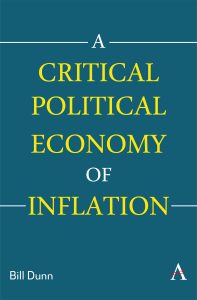
Towards a Critical Political Economy of Inflation
This is a guest post by Bill Dunn, author of Critical Political Economy of Inflation Inflation is back in the news. And it deserves attention. It is economically but also...