



Becoming Into Others in Rapidly Changing Times
This is a guest post by Ana Laura Arellano, Jorge Vélez and David Arellano authors of Becoming-Into-Others
It is no secret that we live in times of unprecedented transformations and uncertainty: impending wars, climate change (global warming, transformation of marine currents, tornados, draughts, coral bleaching, global water bankruptcy and severe climate issues), many extinction events, growing concerns about finite resources and the problems of expanding animal industries as well as agriculture through monocrops and GMOs. All the while we are also living in times of growing dependence on technology, be it social media platforms or services or Artificial Intelligence – all of which have an impact on our immediate and future environment.
What do these problems mean to most of us living on this planet, the average people with moderate ecological footprints, in front of heavy industries and corrupt systems of inequality? Moreover, who are we and who can we become in the midst of climate change?
We have been told that we are all responsible for the environmental issues that we face. And we are indeed responsible for our consumption habits as well as our direct and indirect effects on the environment. But, as has become apparent, we are not all responsible to the same degree for the brutal pollution, ramped extinction and annihilation of many life forms, from species to entire ecosystems. When faced with the impossibility of individually or maybe even locally asserting change in a positive manner to ensure a future that seems bright, we might feel like we have been rendered incapable of action, thought and, worst of all, imagination. Our future seems to be captured and sealed in catastrophe. Authors from Donna Haraway to Isabelle Stengers have pointed this out.
How are we to reimagine accountability in a way that feels rewarding and hopeful for our collective future?
In our book Becoming-Into-Others: An Interdisciplinary Approach To Problems Concerning Life, we try to tackle what it means to create a new paradigm of existence, one which depends on understanding and valuing the world we live in and whom we share it with. Thinking with and through science fiction narratives in a feminist scheme, as much as through biopower and biopolitical analysis of problems occurring in real time, we try to reimagine new potencies of life and, furthermore, to create new paradigms of organisation that are capable of multispecies ongoingness.
Through three main topics – transformation of life, extinction and symbiosis – we explore how becoming into others might lead transformation from profit and enhancement to holding space and creating response-abilities for caring and nurturing life, by direct relationships with others we encounter as well as creating imaginative political thought. We hope, in these unprecedented times of transformation, sym-imaginaries as well as biopoietic and sym-biopoietic practices aid us to become capable in creating and sustaining diverse local communities that treasure life, as much as to seek different paths and organisations for the future.
Latest Posts

Talk of the Town: Monthly Publishing Industry News Digest
As September draws to a close, the publishing industry continues to explore new connections between books, technology and audiences. From AI’s growing influence on academic writing and peer review to...
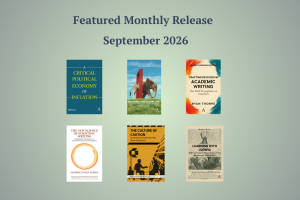
Featured Monthly Releases – September 2026
As September closes, discover new titles that explore writing, media, music, life and economics from fresh interdisciplinary perspectives. Our featured releases offer thought-provoking approaches to academic communication, cultural experience and...
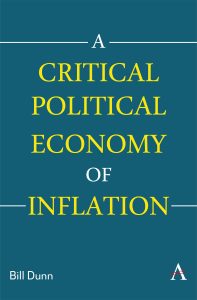
Towards a Critical Political Economy of Inflation
This is a guest post by Bill Dunn, author of Critical Political Economy of Inflation Inflation is back in the news. And it deserves attention. It is economically but also...

Talk of the Town: Monthly Publishing Industry News Digest
As August comes to a close, the publishing industry continues to balance strong traditional markets with rapid technological change, as AI reshapes discovery and scholarly communication while questions of research...