



Recovering the Voice of Maria Teresa de Sá Nogueira: A Conversation with Sandra Sousa
This is an interview with Sandra Sousa, author of The Life and Writings of Maria Teresa de Sá Nogueira
- What inspired you to write The Life and Writings of Maria Teresa de Sá Nogueira?
The idea for this book began during a research trip to Mozambique. While I was there, I had the opportunity to meet Maria Teresa de Sá Nogueira’s son, who shared stories about his mother and her life as a journalist and intellectual. Hearing about her experiences and learning more about her writings immediately captured my attention. As I began to explore her work, I realised how significant her voice was and how little recognition she had received in historical and literary discussions. That encounter sparked my interest in recovering her story and bringing her writings together so that readers could better understand her contributions and the historical context in which she wrote.
- For readers who may not know her, who was Maria Teresa de Sá Nogueira?
Maria Teresa de Sá Nogueira was a Portuguese journalist and intellectual who lived during a period of profound political and social transformation. Born in Lisbon in 1936, she later spent significant time in Mozambique during the final decades of Portuguese colonial rule. Through her journalism, she commented on everyday life while also addressing deeper social issues such as inequality, gender norms and colonial power structures. She wrote for several newspapers and magazines, and her work reveals a thoughtful and critical engagement with the society around her.
- What makes her writing particularly relevant today?
One of the striking aspects of Teresa’s writing is how contemporary it feels. She addressed questions that remain urgent today: social justice, the role of women in public life and the responsibility of intellectuals and journalists to speak out against injustice. Her articles often examine how systems of power affect ordinary people, particularly women and children. In many ways, she anticipated conversations that we now associate with intersectional feminist thinking.
- Your book includes a selection of her journalistic writings. What was the process of bringing these texts together?
Teresa’s son shared with me a compilation of her writings. Before she passed away, Teresa had begun gathering many of her journalistic pieces with the intention of preserving them, and after her death, friends helped continue that effort. That initial collection became an important starting point for my work. One of the central tasks of this project was to revisit these writings, organise them and place them within their broader political and cultural framework. The book presents a curated selection of her articles alongside contextual analysis that helps readers understand the historical moment in which she was writing. In this sense, the book not only recovers Teresa’s voice but also offers insight into the social and political realities that shaped her journalism.
- How does Teresa’s work intersect with the history of the Portuguese empire and decolonisation?
Her life and writing were deeply shaped by the realities of the Portuguese colonial world. Living in Mozambique allowed her to witness the contradictions of colonial society firsthand. Rather than accepting the dominant narratives of the time, she often questioned social hierarchies and the injustices embedded within colonial structures. Her journalism offers a unique perspective on everyday life during the late colonial period and provides valuable insight into the tensions and transformations that eventually led to decolonisation.
- What do you hope readers will take away from this book?
I hope readers will discover not only a fascinating historical figure but also a powerful example of how writing can engage with social realities. Teresa’s journalism shows that even short newspaper articles can carry intellectual depth and ethical commitment. More broadly, I hope the book encourages readers to think about how many important voices, especially women’s voices, remain absent from the historical record.
- Why is it important to recover forgotten writers like Maria Teresa de Sá Nogueira today?
Recovering forgotten writers helps us build a more inclusive understanding of history. Intellectual and cultural histories are often shaped by what survives in archives and by which voices were considered important enough to preserve. By rediscovering figures like Teresa, we expand the range of perspectives that inform our understanding of the past. Her work reminds us that journalism, literature and political thought are often intertwined and that even voices that seemed marginal in their own time can have lasting significance.
Latest Posts
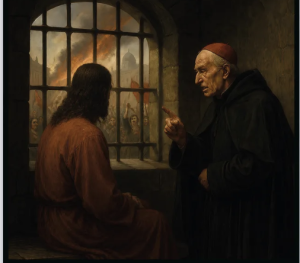
The Rejection of Power: Nonviolence and the Grand Inquisitor
This is a guest post by Alexei Anisin author of Nonviolence and the Grand Inquisitor Silence fills a cold dungeon cell in 15th-century Seville. Outside, the Inquisition is raging –...

Becoming Into Others in Rapidly Changing Times
This is a guest post by Ana Laura Arellano, Jorge Vélez and David Arellano authors of Becoming-Into-Others It is no secret that we live in times of unprecedented transformations and...

Talk of the Town: Monthly Publishing Industry News Digest
As September draws to a close, the publishing industry continues to explore new connections between books, technology and audiences. From AI’s growing influence on academic writing and peer review to...
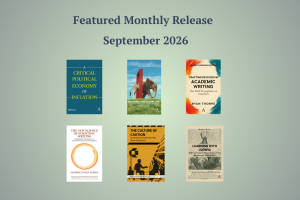
Featured Monthly Releases – September 2026
As September closes, discover new titles that explore writing, media, music, life and economics from fresh interdisciplinary perspectives. Our featured releases offer thought-provoking approaches to academic communication, cultural experience and...