



Artificial Intelligence and Music: From Resistance to Exploitation
This is a guest post by David Arditi, author of Music Technology Panic Narratives Beyond Piracy: From Taping to Napster to TikTok
The recording industry regularly paints its consumers as pariahs waiting for new technologies to hurt the very musicians they love. In Music Technology Panic Narratives Beyond Piracy: From Taping to Napster to TikTok, I examine how the major record labels single out new technologies as if they will bring an end to recorded music. Major labels set their sights on artificial intelligence (AI) in the 2020s. They claimed it would kill music, but just as with every new technology, major labels want to set the rules to benefit their profits. As opposed to previous distribution technologies, this new creation technology could destroy the creative process. As a result, in late 2025, the major labels’ strategy to harness AI to exploit labor became transparent.
At every turn, major labels and their trade associations use what I term the “piracy panic narrative”—a narrative in which new technologies threaten the very existence of recorded music. The piracy panic narrative is a rhetorical construct that helps to obscure the material reality of the recording industry by positioning major record labels and their recording artists as the victims of widespread crime in the form of piracy. Now, divorced from piracy, the recording industry continues to use the panic narrative to dissuade fans from specific practices and to lobby the government for particular policies. Each time, they use the narrative to change public sentiment, the law, and policy to strengthen their profits. At every moment what gets ignored is labels are the primary exploiter of musicians.
With AI, major record labels resisted the technology’s implementation. As always, they did so based on copyright law. They claimed that “feeding the machine,” so-to-speak, created unauthorized reproductions of music. In the Conclusion to Music Technology Panic Narratives Beyond Piracy, I address this approach as problematic, but I am broadly supportive of the cause. If engineers don’t have the material to train large language models (LLM aka AI), then the AI won’t work.
But the strategy seemed tenuous to me. Since AI is primarily used to undercut labor, I call it algorithmic exploitation (AE) instead of AI because I think this highlights the goal of capitalists to use algorithms to cut labor. In the Conclusion, I wrote:
companies will find a way to profit from the creation of AI music by deploying it as AE music—i.e., AI designed to undercut musicians in the production process. For instance, hit music producer, Timbaland, began using Suno to produce his music. Timbaland can create thousands of tracks on his laptop without using any other studio labor. After complaining about the use of his voice on an AE track, Drake used AE to replicate Tupac and Snoop Dogg’s voice in a diss-track. These are the obvious instances as countless songwriters use ChatGPT to come up with lyrics and themes for their music. As more artists and labels use AE to cut out labor, it will become increasingly difficult to cut AE from the process. Instead, labels, producers, and artists will use AE to eliminate labor from music making.
In other words, it was plain to me the label resistance to AI was tenuous. Industry leaders were only ever concerned about “piracy”—the unauthorized reproduction of copyrighted material. When Mitch Glazier, CEO of the Recording Industry Association of America, announced its lawsuit against AI companies, he claimed “we are already partnering and collaborating with responsible developers to build sustainable AI tools centered on human creativity that put artists and songwriters in charge.” In other words, as long as tech companies play by the major labels’ rules, they will get on board.
Fast-forward to November 2025, and the first partnership between labels and AI companies was announced alongside a settlement for the lawsuit. Warner Music settled their lawsuit with Suno, an AI music platform, without providing details of the settlement. However, it is clear through their partnership that Warner’s artists can train Suno’s algorithms for a fee as long as the artists agree. In addition, Warner’s artists have free access to Suno.
Labels are more than willing to end their opposition to technologies as soon as it benefits them. This is the central point of Music Technology Panic Narratives Beyond Piracy.
Latest Posts
Talk of the Town: Monthly Publishing Industry News Digest
As August comes to a close, the publishing industry continues to balance strong traditional markets with rapid technological change, as AI reshapes discovery and scholarly communication while questions of research...
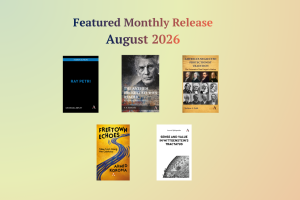
Featured Monthly Releases – August 2026
This August, explore ideas that broaden perspectives, spark new thinking and contribute to meaningful conversations. Discover our featured releases for the month. The Anthem Beckett Studies Reader – Re-viewing Samuel...

Leaping Forward, Sliding Back: The Intangible Revolution Reshaping Economic Formations
This is a guest post by Theo Reks, author of Controlled Economic Evolution At the beginning of summer, a great many things tend to happen. Before people settle into a...

The Anthem Beckett Studies Reader: Re-viewing Beckett (2026)
This is a guest post by S.E. Gontarski, author of The Anthem Beckett Studies Reader: Re-viewing Samuel Beckett The subtitle to this volume of critical essays, Re-viewing Samuel Beckett, punctuates...