



Talk of the Town – Monthly Publishing Industry News Digest
As October draws to a close, the publishing industry continues to navigate the growing influence of artificial intelligence, evolving copyright challenges and uncertainty surrounding research funding. From developments in scholarly publishing to the digital transformation of academic libraries, this month’s stories highlight important conversations around innovation, research integrity and the future of scholarly communication.
- Hundreds of Authors Bring Individual Copyright Claims Against Meta
Around 300 authors have brought individual copyright claims against Meta, alleging that their books were copied and used without permission to train artificial intelligence models. The legal action highlights continuing concerns about intellectual property rights and the use of copyrighted works in AI development. The dispute also reflects wider questions facing the publishing industry about author consent, fair compensation and the protection of creative content. Read the full article here: The Bookseller
- Publishers to Share 20 Million Research Papers with AI Start-up
Six scientific publishers, including Sage and the BMJ Group, have agreed to provide a Swedish AI start-up, Redpine, with access to more than 20 million research papers. Under the agreement, the company will pay publishers and authors each time their content is used, introducing a pay-per-use model for AI access to scholarly literature. The initiative represents a new approach to licensing academic content for artificial intelligence applications and raises important questions about fair compensation, intellectual property and the future relationship between publishers and AI developers. Read the full article here: Times Higher Education
- Academic Publishing Weekly: AI, Open Access and Industry Developments
Choice360’s weekly academic publishing roundup highlights several developments shaping scholarly communication. These include a new NISO initiative to track the attribution of scholarly content in AI-generated answers, Elsevier’s support for AI in scientific research and continuing discussions about the economics of open access publishing. The roundup also examines ethical AI practices in creative industries and the potential implications of Informa’s planned separation from Taylor & Francis for humanities and social sciences publishing. Read more: Choice360
- EU Budget Disagreements Raise Concerns Over Research Funding
Disagreements over the European Union’s next long-term budget have raised concerns about possible reductions in research and innovation funding. Research sector representatives warn that difficulties in reaching a compromise could put future investment at risk, although they emphasise that cuts are not inevitable. The discussions highlight the importance of sustained financial support for European research and the uncertainty surrounding future funding priorities. Find out more: Research Professional News
- Are Libraries Prepared for a Second Digital Transformation?
An article in The Scholarly Kitchen examines the need for academic and research libraries to rethink how they manage and provide access to rare, archival and distinctive collections. While earlier digitisation initiatives expanded access to selected materials, many collections remain difficult to discover and use effectively. The article explores how modern technologies, including AI, could improve processing, accessibility and integration with research workflows. It also encourages library leaders to reconsider existing infrastructure and strengthen collaboration across institutions. Click to read here: The Scholarly Kitchen
-
AI-Generated Books Raise Concerns About Academic Library Collections
An opinion article in Inside Higher Ed raises concerns about the inclusion of AI-generated academic books and literature reviews in university library collections. The author examines examples of machine-generated scholarly content and questions whether existing publishing and acquisition practices provide sufficient safeguards for academic quality. The article calls for closer collaboration between faculty members and librarians to evaluate such materials and maintain standards of scholarly credibility. It also highlights wider debates about the role of human expertise, editorial oversight and transparency in academic publishing. Read more: Inside Higher Ed
Latest Posts
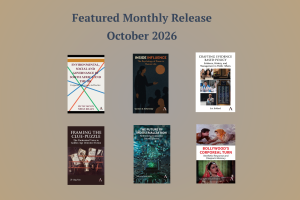
Featured Monthly Releases – October 2026
As October comes to a close, discover new titles exploring economic development, public policy, cinema, sustainability, leadership and literature. This month’s featured releases bring fresh perspectives to contemporary global challenges,...

The Concept of Concepts
This is a guest post by Tony Blackshaw, author of Thirteen Ways of Looking at Leisure As concepts in the history of thought go, leisure has over the last twenty...

The Rejection of Power: Nonviolence and the Grand Inquisitor
This is a guest post by Alexei Anisin author of Nonviolence and the Grand Inquisitor Silence fills a cold dungeon cell in 15th-century Seville. Outside, the Inquisition is raging –...

Becoming Into Others in Rapidly Changing Times
This is a guest post by Ana Laura Arellano, Jorge Vélez and David Arellano authors of Becoming-Into-Others It is no secret that we live in times of unprecedented transformations and...