



Meet the Author: Ron Westray
Widely regarded as one of the greatest composers of our time, Ron Westray continues to expand upon the legacy set before him.
- What inspired you to embark on the journey of researching and authoring your latest book, Compositions, Orchestrations, Adaptations and Arrangements: Complete Works? Why did you consider this subject/topic and what impact do you hope it will achieve?
After nearly 35 years of composing and arranging, this project emerged as a way to formally document my complete works and compositional practice. I wanted to create an archival and practical resource that foregrounds applied musical labour and highlights the quality and intent behind the music rather than its sheer quantity.
- Could you walk us through your writing process for this book? Were there particular challenges or obstacles you had to overcome? How would you characterise your approach to the writing process for this work, from concept to completion?
The process was highly structured and archival, reflecting my formal training. A major challenge was accepting that not every detail could be revisited or perfected. Much of the engraving and editing was self-managed, supported by recordings and audio renderings to clarify compositional intent beyond the printed page.
- In the course of your research or writing, what findings or insights most surprised you?
I was surprised by how clearly recordings revealed compositional intent, sometimes more effectively than notation alone. I also came to appreciate that the value of the work lies less in manuscript perfection and more in the musical challenges and experiences it offers performers.
- Which writers, scholars or thinkers have most influenced your work?
Ellington, Strayhorn, Cervantes, Mingus, Monk and Coltrane – without question. But my thinking is also shaped by philosophy: Ellington’s Onomatopoeia, Mingus’s cinematic approach and Monk’s sense of mystery, alongside guiding concepts such as Clark Terry’s idea of ‘total listening’, which stresses ensemble awareness, balance and musical responsibility that extends beyond what’s written on the page.
- What areas of research or writing do you intend to focus on next?
I’ve been nipping away at some autobiographical fiction – possibly a novel or novella – amid my continued momentum and pending the right conversation with Anthem.
- What factors influenced your decision to publish with Anthem Press?
Anthem Press was recommended by a trusted colleague, and the collaboration felt immediately supportive. I’m grateful for the professionalism, teamwork and guidance throughout the process.
Latest Posts

Talk of the Town: Monthly Publishing Industry News Digest
As September draws to a close, the publishing industry continues to explore new connections between books, technology and audiences. From AI’s growing influence on academic writing and peer review to...
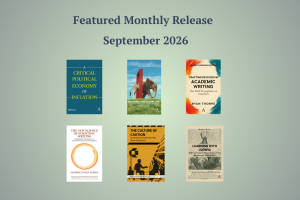
Featured Monthly Releases – September 2026
As September closes, discover new titles that explore writing, media, music, life and economics from fresh interdisciplinary perspectives. Our featured releases offer thought-provoking approaches to academic communication, cultural experience and...
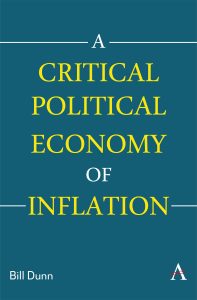
Towards a Critical Political Economy of Inflation
This is a guest post by Bill Dunn, author of Critical Political Economy of Inflation Inflation is back in the news. And it deserves attention. It is economically but also...
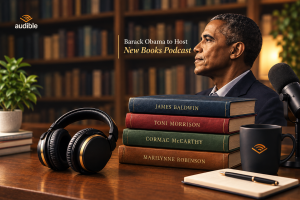
Talk of the Town: Monthly Publishing Industry News Digest
As August comes to a close, the publishing industry continues to balance strong traditional markets with rapid technological change, as AI reshapes discovery and scholarly communication while questions of research...