



Life as an Endless Gig: How Platforms Turn Us into Performers
This is an author interview with Slavko Splichal, the author of The Gig Public
Q: ‘The Gig Public’ is an unusual title. Some might say it sounds more like a book about precarious work than about public life. Why insist on the word ‘gig’?
A: That tension is exactly the point. The word ‘gig’ originally meant a one-off performance – a musician playing in a bar, a comedian doing a set, someone hired briefly for a task. Public speaking, too, was imagined as a kind of gig. Today, platforms like YouTube, TikTok or X convert every act of visibility into a micro-performance – fleeting, attention-seeking, often unpaid or underpaid, but necessary for survival in the digital attention economy. By calling these formations ‘gig publics’, I want to capture both the performance-like character of digital public life and its precarious, fragmented, transactional nature.
Q: But isn’t public life supposed to be about shared concerns and deliberation – not just about performance?
A: That’s the foundational idea, indeed. Publicness was once tied to debates, common interests and institutional arrangements. Today, however, it has been reshaped by platforms into a performative formation: you don’t so much ‘participate in the public’ as stage yourself before it. Instead of visibility for public-worthy issues and events that are constitutive of the public, we get self-promotional visibility. Instead of deliberation, we get performance. This doesn’t mean people no longer care about public issues – it means that the form through which they engage has fundamentally shifted.
Q: You argue that visibility has become a kind of compulsion. Isn’t that overstating it? People can always log off.
A: In theory, yes. But in practice, the will to visibility – this inner drive to appear, to be noticed, to be measured – has become deeply ingrained. Platforms encourage us to believe that our value depends on metrics: likes, followers, views. Even those who step away feel the pull to return, because visibility is now tied not only to social recognition but also to economic opportunity. The line between self-expression and self-exploitation is increasingly thin.
Q: Some critics might say that by framing everything as performance you risk trivialising genuine civic engagement. Isn’t that unfair?
A: Not at all. Performance is not inherently shallow. Think of theatre, or protest or even parliamentary debate – these are all performances with civic weight. What I argue is that platforms have made performance the default mode of publicness. That shift matters, because performance on platforms is not neutral – it is curated, nudged and monetised by algorithms. What might start as civic engagement can easily be redirected into spectacle.
Q: If publicness has become ‘an endless gig’, does that mean democracy itself is in trouble?
A: It means democracy faces a profound challenge. When publicness fragments into gigs, it becomes harder to build continuity, shared understanding or collective power. Instead of publics deliberating, we see performers competing. That doesn’t kill democracy outright, but it changes its conditions under which it can function. To sustain democratic life today, we need spaces that resist the endless-gig logic – spaces that allow slowing down, genuine listening, deep reflection, open discussion and forms of recognition not driven by visibility metrics.
Q: Are we doomed to live as endless performers?
A: I don’t think so. Recognising the gig public is the first step toward change. We can design digital spaces that value depth over constant visibility and resist the commercial pressure to turn every interaction into a performance or a monetised act. Publicness has always evolved. What matters now is shaping it – through socio-technical interventions – in ways that sustain democracy, solidarity and shared meaning, rather than perpetuating endless performance.
Latest Posts

Talk of the Town: Monthly Publishing Industry News Digest
As September draws to a close, the publishing industry continues to explore new connections between books, technology and audiences. From AI’s growing influence on academic writing and peer review to...
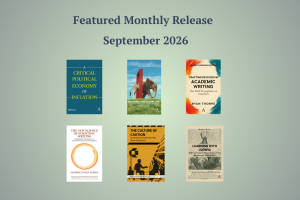
Featured Monthly Releases – September 2026
As September closes, discover new titles that explore writing, media, music, life and economics from fresh interdisciplinary perspectives. Our featured releases offer thought-provoking approaches to academic communication, cultural experience and...
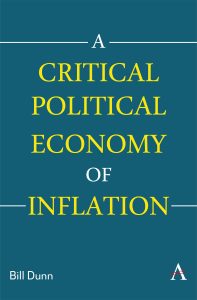
Towards a Critical Political Economy of Inflation
This is a guest post by Bill Dunn, author of Critical Political Economy of Inflation Inflation is back in the news. And it deserves attention. It is economically but also...
Talk of the Town: Monthly Publishing Industry News Digest
As August comes to a close, the publishing industry continues to balance strong traditional markets with rapid technological change, as AI reshapes discovery and scholarly communication while questions of research...