



The fourth school on power
This is a guest post by Waqas M Awan, author of Power of Sage: An Antithesis to Machiavellian Prince
Since the cognitive revolution in humanity about 70,000 years ago, humans have mastered the art of cooperation on a massive scale. No species on Earth has the tendency to form as big cooperative societies as humans do, leading to the establishment of large cities, nations and civilizations. Without humans forming large cooperative societies together, humans would not have been able to ward off threats from other species, given that they are one of the weakest mammals in the world. However, with the formation of societies came the need for leadership and the question of who should wield power to guide these vast associations of people.
For centuries, philosophers have grappled with the concept of power and who should lead society. From households to municipalities, from corporations to labour unions, from governments to geopolitics, power has played a pivotal role in keeping people together. So far, there are three ideal models of how power is constructed to lead a society.
Perhaps the first model of power was put forward by Plato when he proposed the concept of the ‘Philosopher King’ in the fourth century bce. He believed that power should reside with all-knowing philosophers. He believed that those who have the knowledge and expertise to take society forward should wield power. However, he overlooks the need for societal consent and fails to address the potential for abuse of power by those who claim to possess superior knowledge.
The second school of power came from Niccolò Machiavelli. He came up with the idea of the ‘Prince’ in the sixteenth century ce. He believed that power should be exercised by a person who is pragmatic. A leader who is not scared of using dubious and cunning methods to maintain power. He acknowledges the harsh realities of politics, yet it neglects ethical considerations and disregards the well-being of society in pursuit of self-preservation.
The third model of power was put forward by Friedrich Nietzsche when he popularised the idea of the ‘Übermensch’ in the nineteenth century ce. He believed that power resides with someone who is free from traditional frameworks. A person who pursues individual greatness. However, this model on power risks promoting a self-centred approach to leadership that may undermine societal cohesion and collective progress.
While these historical models offer valuable insights into the dynamics of power, they also highlight the need for a more holistic understanding of leadership. This brings us to the proposed fourth model: the ‘Sage’. This model is introduced in the book ‘Power of Sage’. It presents an alternative approach to leadership. It envisions a leader driven by inner peace, guided by ideology and consciousness, and capable of harnessing influence to propel society forward. Unlike previous models, which often neglect societal preferences or ethical considerations, the ‘Sage’ model emphasises the importance of empathy, integrity and a deep connection to the collective well-being.
By acknowledging the limitations of past models and offering a more nuanced perspective on power, the ‘Sage’ model invites us to reconsider our understanding of leadership. It reminds us that true leadership transcends mere authority and requires a profound commitment to the common good.
Latest Posts

Talk of the Town: Monthly Publishing Industry News Digest
As September draws to a close, the publishing industry continues to explore new connections between books, technology and audiences. From AI’s growing influence on academic writing and peer review to...
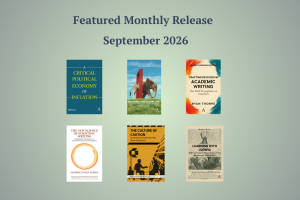
Featured Monthly Releases – September 2026
As September closes, discover new titles that explore writing, media, music, life and economics from fresh interdisciplinary perspectives. Our featured releases offer thought-provoking approaches to academic communication, cultural experience and...
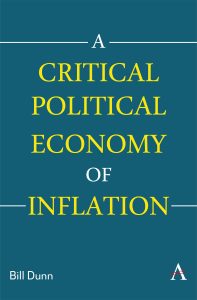
Towards a Critical Political Economy of Inflation
This is a guest post by Bill Dunn, author of Critical Political Economy of Inflation Inflation is back in the news. And it deserves attention. It is economically but also...

Talk of the Town: Monthly Publishing Industry News Digest
As August comes to a close, the publishing industry continues to balance strong traditional markets with rapid technological change, as AI reshapes discovery and scholarly communication while questions of research...