



A life with Wittgenstein
This is a guest post by Peter Hacker, author of A Beginner’s Guide to the Later Philosophy of Wittgenstein
Wittgenstein studies flourished in the second half of the twentieth century, as philosophers struggled with the interpretation of his two great masterpieces, the Tractatus Logico-philosophicus and the Philosophical Investigations. Many of his eminent pupils such as Georg-Henrik von Wright, Elizabeth Anscombe, Alice Ambrose, and Norman Malcolm wrote invaluable books and essays on his works and on themes in his work, as well as memoirs of their encounters with him. His numerous unfinished writings and notes were slowly published, initially in German and later in translation. A second generation of commentators and interpreters began publishing books on his works in the 1970s. I became a Fellow of St John’s College, Oxford, in 1966. I wrote my first book on Wittgenstein between 1969 and 1971. It was entitled Insight and Illusion and was published in 1972. It is difficult to convey to the current generation what it was like to struggle with Wittgenstein’s great ideas then, when so little had yet been published and the little that was available was initially published only in German. My first book was well received, even though, as I came to realize, it was full of mistakes of which my reviewers were as unaware as I was. I was fascinated with Wittgenstein’s writings and felt a profound kinship with his forms of thinking in his post 1929 writings. I gradually realized some of my mistakes, and when I wrote the second edition of Insight and Illusion in 1985-–1986, I completely rewrote half the book.
In 1976/–1977, my colleague at St John’s, Gordon Baker, and I decided to write a detailed, paragraph- by- paragraph analytical commentary on the Philosophical Investigations. We initially thought it would take us two volumes and five years to complete. As it turned out, it took four volumes, currently published in seven volumes, and a further historical epilogue. Only the first two volumes (in the current edition, the first three of seven) were written with Baker, the remained remaining were written alone. I completed the task only in 1996. It was pioneering work, in which each of the numbered remarks in the Investigations was traced through all its drafts and sources in Wittgenstein’s voluminous manuscripts and typescripts (some twenty thousand pages) as well as reported conversations and lecture notes taken by his pupils. I should like to think that it paved the way and provided the model for serious Wittgenstein studies.
I continued to write extensively on themes in Wittgenstein’s philosophy over the next two decades. I became engaged with the notorious American interpretation of Wittgenstein’s philosophy. This interpretation did untold harm to the cause of Wittgenstein’s ideas, arguing as it did that philosophy according to him, was nothing but nonsense. I did my best to demolish it. Thereafter, I continued to write occasional essays on Wittgenstein and the relation of his thought to that of other great philosophers, which I published in two further volumes. So, I have travelled for many years through the landscape of his thought. Greater familiarity bred ever greater respect.
Wittgenstein’s ideas are formidably difficult. It was with pleasure that, towards the end of a long career as a teacher of philosophy, I felt ready to venture, like Maimonides, to write a guide for the perplexed: to take my readers by the hand, so to speak, and lead them through the wondrous landscape of the later philosophy of Wittgenstein. That is what I have done in A Beginner’s Guide to the Later Philosophy of Wittgenstein.
Latest Posts

Talk of the Town: Monthly Publishing Industry News Digest
As September draws to a close, the publishing industry continues to explore new connections between books, technology and audiences. From AI’s growing influence on academic writing and peer review to...
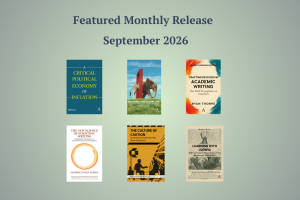
Featured Monthly Releases – September 2026
As September closes, discover new titles that explore writing, media, music, life and economics from fresh interdisciplinary perspectives. Our featured releases offer thought-provoking approaches to academic communication, cultural experience and...
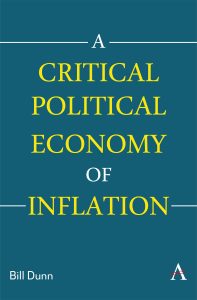
Towards a Critical Political Economy of Inflation
This is a guest post by Bill Dunn, author of Critical Political Economy of Inflation Inflation is back in the news. And it deserves attention. It is economically but also...

Talk of the Town: Monthly Publishing Industry News Digest
As August comes to a close, the publishing industry continues to balance strong traditional markets with rapid technological change, as AI reshapes discovery and scholarly communication while questions of research...