



Caroline Norton’s ‘Love in “the World”‘
Now known chiefly for her dramatic life story and reforms of married women’s child custody and property legislation (see Antonia Fraser’s biography, The Case of the Married Woman and Diane Atkinson’s The Criminal Conversation of Mrs Norton), Caroline Norton was celebrated in her own day chiefly as a novelist, poet, lyricist and composer. She might have enjoyed an even wider literary reputation had she published this novel, composed during her late teens and early twenties – the age at which Jane Austen is thought to have written Lady Susan, which was also unpublished in the novelist’s lifetime. Like Austen, Norton later transcribed her early work, but expressed dissatisfaction with it and was by then pursuing other literary projects. But while Lady Susan was posthumously published, rewritten, dramatized and even filmed, and Caroline Norton’s previous publication, The Dandies’ Rout (1820), an extraordinarily polished poetic satire for a twelve-year-old about London’s dandified high society, has been discussed in various publications since the early twentieth century, the manuscript of Love in “the World,”, despite its Austenesque style and settings, has remained forsaken for almost two hundred years.
The novel tells of the perils of courtship facing a naïve young girl Alixe, who has been launched onto the London social season. Her encounters with both a worthy and an undesirable suitor open an intriguing window onto the fashionable milieu of the 1820s in which Love in “the World” takes place. Norton was able to draw upon her own experiences of the bon ton and those of her elder sister, Helen. The time in which the novel was set coincides with their entrée to society in the mid-1820s. It was then that Caroline burst upon the scene with all her beauty and brilliance, later recalling “the night upon which she made her début, coming down dressed to the room where her mother and aunt were awaiting her.” She added, “I came out […] to find all London at my feet.”
She believed that London, “where the cry of the drowning suicide is lost in the hum of gathered multitudes restlessly pursuing the pleasures or the business of life,” could be as callous as the metropolitan social scene might prove treacherous, and in alerting the reader to the dangers of fashionable society she made ample use of her own observations as a debutante at her first London season. In a highly readable and coherent narrative with an indeterminate ending, which throws a spotlight onto her life and times, the plot of Love in “the World” initially follows a pattern broadly representative of Norton’s own experience, before developing in unexpected and surprising ways.
The novel also anticipates the dilemmas faced by Norton’s young heroine Beatrice Brooke in her later novel, Lost and Saved (1863). Indeed the novel compares well with any of Norton’s finest narrative writing, such as The Wife (1835) and the autobiographical sections of her pamphlets. Now, two centuries after its author began to visualise her first narrative work, Love in “the World” has finally been published.
Expertly edited by the team who recently published Caroline Norton’s correspondence, the book also includes a Preface by Diane Atkinson, the distinguished historian and biographer of Norton.
Latest Posts

Talk of the Town: Monthly Publishing Industry News Digest
As September draws to a close, the publishing industry continues to explore new connections between books, technology and audiences. From AI’s growing influence on academic writing and peer review to...
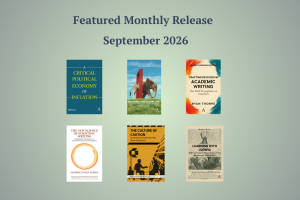
Featured Monthly Releases – September 2026
As September closes, discover new titles that explore writing, media, music, life and economics from fresh interdisciplinary perspectives. Our featured releases offer thought-provoking approaches to academic communication, cultural experience and...
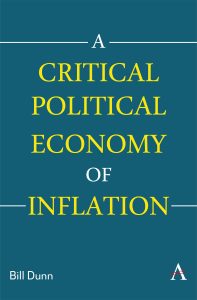
Towards a Critical Political Economy of Inflation
This is a guest post by Bill Dunn, author of Critical Political Economy of Inflation Inflation is back in the news. And it deserves attention. It is economically but also...

Talk of the Town: Monthly Publishing Industry News Digest
As August comes to a close, the publishing industry continues to balance strong traditional markets with rapid technological change, as AI reshapes discovery and scholarly communication while questions of research...