



Meet the Author: Loïc De Cannière
Loïc De Cannière is an economist and impact investor with ample experience in Africa.
- What inspired you to embark on the journey of researching and authoring your latest book, The Future of Employment in Africa? Why did you consider this subject/topic and what impact do you hope it will achieve?
Africa’s situation is unique, driven by an unprecedented demographic expansion. Never in world history has a population grown at such a rapid pace. Over the next 25 years, Africa’s labour market will face an inflow of about 30 million new job seekers per year. If job creation fails to keep pace with labour force growth, the continent risks a dramatic rise in unemployment, which would in turn fuel poverty, social unrest, political instability and migratory pressures.
As a macroeconomist by training, I set out to understand how Africa can meet this immense challenge and where future jobs will come from. As an impact investor active on the continent for more than two decades, I have sought to combine economic research with hands-on, on-the-ground experience. Over the years, I have worked with dozens of microfinance institutions and agri-food companies that support millions of micro-entrepreneurs and smallholder farmers. My company has invested across more than 20 African countries, and I have met hundreds of micro-, small- and medium-sized enterprises – entrepreneurs who created jobs by first creating opportunities for themselves. This journey has given me a unique perspective on Africa’s economic and social dynamics.
In this book, I adopt a realistic yet optimistic outlook. My aim is to highlight Africa’s promising future as a counterbalance to the predominantly negative narrative often portrayed in Western media, which tends to focus on war, unrest, violence, hunger and misery. Such portrayals overlook the continent’s powerful positive momentum – driven by a young population, rapid innovation and remarkable creativity.
Finally, I made a deliberate choice to write a book about Africa’s future. Much has rightly been written about the lasting effects of Africa’s colonial past. Yet I believe it is equally important to shift the focus forward and engage seriously with what lies ahead.
- Could you walk us through your writing process for this book? Were there particular challenges or obstacles you had to overcome? How would you characterise your approach to the writing process for this work, from concept to completion?
I combined four years of my professional career with writing this book, dedicating one day a week – mostly Fridays – to research and writing. Fortunately, a wealth of high-quality reports and robust statistics is available through sophisticated databases such as the World Bank’s Poverty and Inequality Platform and the United Nations Department of Economic and Social Affairs.
That said, ensuring data consistency proved challenging. For example, detailed statistics on migration from Africa to Europe often differ significantly across sources. My impression is that some official datasets blur or obscure figures, likely because of their political sensitivity.
Another challenge was finding the right balance between the language of economic research and the narrative style needed to convey my on-the-ground experiences. It took time to reconcile these two approaches. However, feedback from proofreaders encouraged me not to shy away from blending them. The result, I believe, is a book that is both analytically rigorous and more accessible to read.
- In the course of your research or writing, what findings or insights most surprised you?
When analysing the United Nations’ demographic statistics, I was struck by the projected growth of Africa’s labour force (people aged 15–64). The data point to an inflow of around 30 million new job seekers every year over the next 25 years. I checked the figures repeatedly, almost in disbelief – but they are correct.
At the beginning of this century, during a period of strong economic growth, Africa was able to create an average of about 9 million jobs per year – far short of the 30 million that will be needed going forward. With such a large annual influx of new entrants into the labour market, it is highly likely that labour supply will exceed demand, creating strong migratory pressures. This trend is particularly relevant for Europe, which remains reluctant to accept higher levels of migration. I find it striking that this issue does not receive the political attention in Europe that its scale and implications clearly warrant.
Another unexpected conclusion from my research is that Africa’s informal economy may be the most effective buffer for absorbing this excess labour supply. Workers in the informal sector do not wait for formal companies to offer salaried employment; instead, they create their own livelihoods. This insight led me to conclude that impact investment funds supporting the informal economy – particularly through microfinance institutions – play a highly relevant and often underappreciated role.
- Which writers, scholars or thinkers have most influenced your work?
In analysing Africa’s economy, I have drawn heavily on the work of several outstanding economists. Foremost among them is Paul Collier, Professor of Economics and Public Policy at the University of Oxford, whose rigorously argued analyses of the root causes of poverty in Africa and of migration dynamics I deeply admire. I had the privilege of meeting him once, and I am grateful that he kindly agreed to write an endorsement for my book, which appears on the back cover.
Another economist who has strongly influenced my thinking is Carlos Lopes, a Bissau-Guinean development economist. He served as Executive Secretary and High Representative of the United Nations Economic Commission for Africa and is currently Professor at the Nelson Mandela School of Public Governance at the University of Cape Town. His book Structural Change in Africa: Misperceptions, New Narratives and Development in the 21st Century has been particularly influential in shaping my perspective on Africa’s industrial future.
My chapter on Africa’s disruption – an effort to explain many of the continent’s contemporary challenges – was also informed by the work of Daron Acemoglu, especially Why Nations Fail: The Origins of Power, Prosperity, and Poverty, and by Basil Davidson’s The Black Man’s Burden: Africa and the Curse of the Nation-State.
- Looking ahead, what areas of research or writing do you intend to focus on next?
Africa’s industrial landscape is undergoing rapid and encouraging transformation. Large homegrown industrial conglomerates, such as Nigeria’s Dangote Group, are emerging as major players. Some even speak of an ‘African Renaissance.’ African leaders are increasingly leveraging the continent’s vast reserves of critical minerals to require foreign companies to invest in local processing and value-addition facilities rather than exporting raw materials alone. This shift marks an important structural change – one that I would be interested in to carefully document and analyse.
- What factors influenced your decision to publish with Anthem Press?
I initially published my book in Dutch but soon decided to produce an English edition in order to reach a wider audience and increase its impact. After approaching several publishers without success, a relative recommended Anthem Press, with whom he had previously published a book and had an excellent experience.
I completed Anthem Press’s Publishing Proposal Form, investing considerable time and effort in crafting a clear and well-structured submission. Within just a few days, I received a positive response – something I had never experienced with any other publisher. This immediately stood out to me.
Throughout the entire process, I have been impressed by Anthem Press’s professionalism, from editing to marketing and beyond. The rigorous peer-review process significantly strengthened the quality of the book compared to its initial version. I would strongly recommend Anthem Press to other writers, and I have already succeeded in encouraging another Africa-focused author to collaborate with them as well.
Latest Posts

Talk of the Town: Monthly Publishing Industry News Digest
As July comes to an end, the publishing sector continues to respond to rapid technological change, shifting research priorities and renewed conversations around open access, publishing quality, academic resilience and...
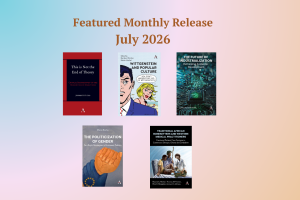
Featured Monthly Releases – July 2026
This July, explore a collection of thought-provoking new titles that address philosophy, politics, healthcare, culture and sustainable development. Our featured releases offer fresh perspectives on some of today’s most pressing...

How Gender Became a Political Weapon for the Far Right
This is a guest post by Maria Barbu, author of The Politicization of Gender In 2016, the election of Donald Trump did more than disrupt American electoral politics. It redefined...
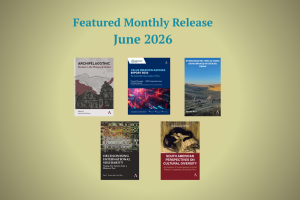
Featured Monthly Releases – June 2026
This June, discover new titles that explore the intersections of culture, society and global transformation. Spanning decolonisation, sustainability, philosophy, regional studies and public policy, these latest releases offer timely perspectives...