



Meet the Author: Stan Lai
Stan Lai has been called ‘the major contemporary Asian playwright of his time, perhaps of all time’ (Robert Brustein), ‘the best Chinese-language playwright and director in the world’ (BBC) and ‘Asia’s top theatre director’ (Asiaweek). Born in the US and raised in America and Taiwan, Lai earned a PhD from UC Berkeley before launching a groundbreaking career in Taiwan. His 40+ plays are celebrated across the Chinese-speaking world, including masterpieces such as ‘A Dream Like a Dream’ and ‘Secret Love in Peach Blossom Land’. He is co-founder of the Wuzhen Theatre Festival and Huichang Theatre Village in China. Theatre Above in Shanghai is a venue dedicated to his oeuvre.
What inspired you to embark on the journey of researching and authoring your latest book, CreativitRy? Why did you consider this subject/topic and what impact do you hope it will achieve?
CreativitRy reflects a breakthrough in my thinking on how to teach creativity. It is a rewrite of the Chinese version of the book which has sold 1 million copies since its publication in 2006. Approaching creativity from the two sides of being a practitioner and teacher of it, I came to the realisation that the act of creativity, though mysterious, is a traceable function of mind, and therefore we can train the mind to discover our innate creativity.
It is evident how important creativity has become for the world, yet we know so little about it. I strongly believe this book can guide the reader to attain creativity, through training, not only in one’s individual craft and method, but through the cultivation of wisdom in one’s life. Already eight universities in China are working together to create a curriculum for a department and graduate school of creativity studies, and this book is the foundation of that curriculum.
Could you walk us through your writing process for this book? Were there particular challenges or obstacles you had to overcome? How would you characterise your approach to the writing process for this work, from concept to completion?
The challenges for the original Chinese book were enormous, because the subject matter all deals with the breakthrough of personal vision, and academic research only helps to illustrate the various points in the breakthrough. This English version took five years to write, and the main challenge was shifting the tone for a Western readership. In the Chinese-speaking world, I am rather well known, and this creates a certain attitude when speaking to the Chinese audience. This needed to be adjusted, and nearly everything had to be rewritten with the Western reader in mind.
In the course of your research or writing, what findings or insights most surprised you?
One of the backbone theories of the book takes its cue from the Buddhist saying that one needs method and wisdom to succeed in practice. What surprised me to a great degree was to realise that education at all levels these days deals mostly with method, and that wisdom is left for the individual to find. Nowhere in the world is there a Department of Wisdom or College of Wisdom. Another thing that surprised me was learning the extent of which we must relearn, or unlearn things, that have become a habit to become creative.
Which writers, scholars or thinkers have most influenced your work?
Laozi’s Tao Te Ching is to me one of the wisest and most creative works ever written, and has always been an influence. I also had the great fortune to be taught by some of the great masters of Tibetan Buddhism in the 20th century. One of the key quotes I use in the book is from the Vietnamese monk poet Thich Nhat Hahn. I have also had the great fortune to be in the company of many great artists of our time, seeing their works and becoming personal friends, and understanding their minds.
Looking ahead, what areas of research or writing do you intend to focus on next?
I have been away from academia ever since I got my PhD in 1983. Mine is a creative journey, and I continue to write and direct new works. At the time of the release of CreativitRy, I am hard at work on my 43rd original theater play, Descent, which will open in Taipei at the end of the year.
What factors influenced your decision to publish with Anthem Press?
The breadth and depth of the Anthem catalog made me feel at home, as well as how the press is positioned on the academic side, but leaning toward crossing over to a larger readership.
Latest Posts
Talk of the Town: Monthly Publishing Industry News Digest
As September draws to a close, the publishing industry continues to explore new connections between books, technology and audiences. From AI’s growing influence on academic writing and peer review to...
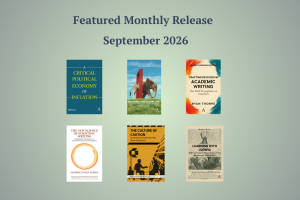
Featured Monthly Releases – September 2026
As September closes, discover new titles that explore writing, media, music, life and economics from fresh interdisciplinary perspectives. Our featured releases offer thought-provoking approaches to academic communication, cultural experience and...
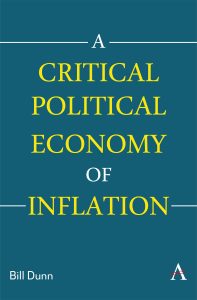
Towards a Critical Political Economy of Inflation
This is a guest post by Bill Dunn, author of Critical Political Economy of Inflation Inflation is back in the news. And it deserves attention. It is economically but also...
Talk of the Town: Monthly Publishing Industry News Digest
As August comes to a close, the publishing industry continues to balance strong traditional markets with rapid technological change, as AI reshapes discovery and scholarly communication while questions of research...