



Reflections on Bollywood’s Golden Age
This is a guest post by Jasmine Sofia Jannif, author of Sentimental Songs, Melodrama and Filmic Narrative in Bollywood’s Golden Age (1951–1963)
This book came to me late in life, but its origins go back to colonial heydays in the streets of Suva, Fiji, where with my father I watched Bollywood (Hindi) films in theatres whose names celebrated our very colonial experience. The names of these theatres – the Lilac, Century, Regal, Phoenix – had very little to do with either India or Fiji but there they were with queues lining up every Saturday morning for the latest Hindi film. I was in my teens then and the idea of Bollywood cinema as a national enterprise (of a newly emergent nation) escaped me totally. What, however, remained etched in my memory were the songs of the films of the fifties and sixties. When much later in life I turned my attention to this body of cinema (my University of Wisconsin training as a graduate student and as a Fulbright Scholar was in home economics education) as a scholarly archive or object of knowledge, I found that to write about Bollywood cinema for me meant returning to the songs of what I understood as the Golden Age of Bollywood. To write about it, I needed a thematic crux as well. This I discovered when I began to think through the central role of sentimentality and melodrama in films marked primarily by the themes of love, death and desire. I had always felt that songs have an affective dimension insofar as they have an emotional impact on the spectator. In addition, they have a narrative function as they advance the plot/story. In exploring these two dimensions, I began to write a book that foregrounded the roles of auteurs, playback singers, lyricists and composers. The registers, moods and in some cases ragas of songs were examined over a broad corpus of examples to identify their impact on the spectator, their role in the narrative of the film and their thematisation in the films with reference to specific emotional states. In so doing, the book theorised sentimentality and melodrama in the context of Hindi film songs to more fully identify the nature of sentimentality and to articulate the way songs play a role in the melodramatic form.
To make my case and to achieve my objectives, it was necessary for me to undertake several critical strategies. The first, a retrospective survey of the material on the general subject of the relationship between emotions, cinema and song, was undertaken as part of the protocols of humanistic scholarly enterprise. Although this literature is extensive, the survey revealed that by and large, scholars have not fully considered the ways in which songs lead to the memorial construction of films and the degree to which a spectator connects with films through their songs. The studies tended to deflect the emotional dimension of songs, their internal lyrical structure and their intertextual connections in favour of readings that treated songs as subsidiary to other formal elements. The second was a schematic account of the period before the Golden Age with reference to the place of melodramatic sentiments in the construction of films and, especially, in the evocative power of the song lyrics, both as poetry and as singing. P. C. Barua’s Hindi version of Devdas (1935) was read as the archetypal as well as the foundational cinema of sentimentality. In these chapters, it was argued that while Indian theories of emotional responses – notably rasa theory – recognised the place of cathartic outpouring in any dramatic presentation, the shape and structure of Bollywood cinema was indebted to the melodramatic imaginary that came to India with British colonisation. The archival material on English novels read in colonial times indicated that novels dealing with the ‘man of feeling’, novels such as Henry Mackenzie’s The Man of Feeling (1771) and Oliver Goldsmith’s The Vicar of Wakefield (1766), provided the melodramatic structures within which native structures of feeling (as in the varied rasas) may be given felt presence. That structure and its emotional pulling power dictated cinema, and especially the cinema of the Golden Age. There are direct links between Devdas (1935) and Pyaasa (1957) and these links speak to the presence of English discourses of sentimentality. Such was their pervasive power, indeed their affective intensities, and strength that no film escaped from their enervating and ineluctable presence. And these features invaded the Bollywood epic such as Mughal-e-Azam (1960) as well as the output of two of the period’s finest auteurs: Raj Kapoor and Guru Dutt.
This flexibility of the form lent itself so readily to a native understanding of structure as anecdotal linking where digressions were brought into the central narrative. The realities of history, politics and society could be depicted through the journey of a character within the established genre of romance – a genre that uses the melancholic imaginary of lost love, longing, loneliness, death and desire. Sentimental and melodramatic emotion ultimately enhanced cinema’s ethical role in building a post-colonial nation – a nation that was emerging from the trauma of partition. In the Golden Age of Bollywood, especially, the weight of epic references served to affirm the values of a secular and modern India. Cinema and the songs in films were a significant part of this somewhat disparate filmic milieu of history, emotion and ethics. Consequently, this book asked the central question: why and how did melodrama and the songs of sentimentality become such a dominant feature of Bollywood cinema during the period 1951–1963? In the broader perspective of the period (1951–1963), several critical dynamics come together in cinema that underscore the value of the song as a critical component of Hindi films. Films are not simply musicals with melodramatic songs. Rather the overview provided in this book demonstrates that there was a critical relationship between a number of factors that illustrated a coherent set of motivating factors and histories as well as a coherent idea of the spectator that served to reinforce the centrality of songs in these films.
Latest Posts

How U.S. Cities Make Progress on Climate Action
This is a guest post by Courtney Humphries, author of Climate Change and the Future of Boston As the United States formally withdrew from the Paris Agreement this January for...
Suffering, Antitheodicy and Meliorism
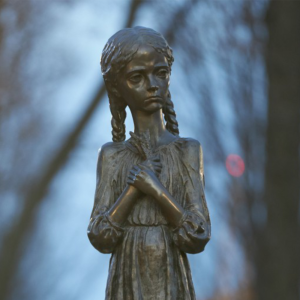
This is a guest post by Sami Pihlström, author of Advanced Introduction to Antitheodicy The affliction we see around us merely by following daily news about wars, famines, political persecution...
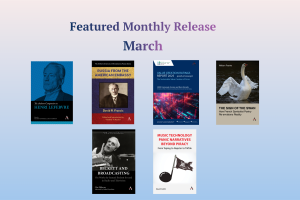
Featured Monthly Releases – March 2026
This March, discover ideas that spark new thinking and deepen critical conversations. Explore our featured releases for the month. Music Technology Panic Narratives Beyond Piracy: From Taping to Napster to...

Talk of the Town: Monthly Publishing Industry News Digest
This March, the publishing industry has continued to respond to shifting market forces, technological developments and evolving reader engagement across the global landscape. At the London Book Fair: Translations from...