



Meet the Author: Peter McAteer
Peter McAteer is Managing Director of Sustain Learning LLC. He was also former Managing Director of Harvard Business Publishing and former Chief Learning Officer of the United Nations Development Programme.
- What inspired you to embark on the journey of researching and authoring your latest book, Leading the Sustainable Organization? Why did you consider this subject/topic and what impact do you hope it will achieve?
Sustainability is a priority for human society and every business. If you really believe that – as I do – then it’s an endlessly fascinating topic to explore. It is important, deeply complex and something that has generational impact.
Unfortunately, we are not making the necessary progress to stave off the worst effects of biodiversity loss and climate change. The book addresses the need for companies to chart a transition course away from legacy products and services to business organizations that are sustainable by design. My goal is two-fold. First, to offer a blueprint for existing leaders who are in a position to make an impact today and in the next ten years. Second, to reach students who will become the next generation of leaders with the ability to make an impact in 2030 and beyond.
- Could you walk us through your writing process for this book? Were there particular challenges or obstacles you had to overcome? How would you characterise your approach to the writing process for this work, from concept to completion?
My research informs my teaching, and I tend to write as I would teach. I frame key challenges that need to be solved and build a framework of the knowledge and skills needed to solve them. The chapter structure is designed so that individual themes like innovation, competitive advantage or business transitions can not only be taught as stand-alone topics but are also logically sequenced to build on each other. Each chapter ends with a summary and a short quiz, and the book is supplemented with a glossary of the terms covered in the book and additional resources such as databases where the reader can look for additional insights.
My books try to empower the reader to take action and are highly visual with dozens of tables, charts and graphics. I use the writing process to refine my thinking based on student feedback and field experience. I also look for input during the writing process from both thought leaders and practitioners since I want my books to support both audiences.
- In the course of your research or writing, what findings or insights most surprised you?
I’ve been involved in studying sustainability for several decades. What remains surprising is how many current leaders and students remain ignorant of both the key challenges and the opportunities presented by sustainability. We are now two thirds of the way through the Paris goals and over 25 years since the release of the Millennium Development Goals. Global awareness remains uneven, misinformation remains pervasive and progress slow. Despite this, I find inspiration in every industry from leaders charting the way forward, often finding innovative ways to add business value. I find most students and younger workers deeply interested in creating a more sustainable future and attracted to the prospect of working for an organization with both a sense of purpose and the potential for social impact.
- Which writers, scholars or thinkers have most influenced your work?
I’ve always been impressed by individuals who work at the intersection of leadership and innovation. Practitioners from past decades like Bruce Henderson (BCG), Bill Bain (Bain and Company) and Fred Gluck (McKinsey) are all influential as well as Harvard professors like Clay Christensen, Linda Hill and Amy Edmondson, and the University of Michigan’s C.K. Prahalad. There are of course many entrepreneurs, academics and policy leaders. I had a chance during my early career to hear World Bank economist Herman Daly speak, and I think his insights on sustainability have stood the test of time. I also worked at the United Nations when Kofi Annan was the Secretary General, and I found him to be an insightful leader and a great communicator.
One of the great things about being involved in sustainability is that my work touches on many disciplines with their own thought leaders. The field is filled with topical experts in areas like climate change, coral reef dynamics, global tipping points, battery storage chemistries and water diplomacy – to name just a few. Each discipline has a body of established research as well as a new generation of authors charting breakthroughs. Branded publishing and research institutions serve an important purpose by introducing readers to curated sets of new ideas and new voices.
- Looking ahead, what areas of research or writing do you intend to focus on next?
I believe that building a more sustainable world is both important today and a legacy we can leave for future generations. My research and writing will follow our shared progress on transitioning to a more sustainable society.
Change management theory tells us that the transition process will likely have disruptions and detours along the way. Although new technology, capital investment and supportive public policy will be important, future success will ultimately be achieved by developing thousands of young leaders committed to a common set of sustainability goals.
- What factors influenced your decision to publish with Anthem Press?
I’ve now published three books with Anthem Press and have been pleased with my interactions with the publisher Tej Sood and the editorial teams. My introduction to Anthem Press was linked to my professional relationship with Professor Lawrence Susskind at the Massachusetts Institute of Technology. His position as executive editor for both the Anthem Environment and Sustainability series and the Anthem Strategies for Sustainable Development series convinced me to try Anthem. The editorial boards associated with both series are first rate.
Latest Posts

How U.S. Cities Make Progress on Climate Action
This is a guest post by Courtney Humphries, author of Climate Change and the Future of Boston As the United States formally withdrew from the Paris Agreement this January for...

Suffering, Antitheodicy and Meliorism
This is a guest post by Sami Pihlström, author of Advanced Introduction to Antitheodicy The affliction we see around us merely by following daily news about wars, famines, political persecution...
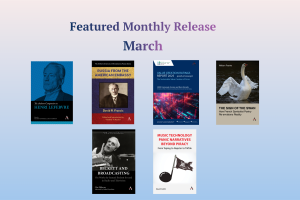
Featured Monthly Releases – March 2026
This March, discover ideas that spark new thinking and deepen critical conversations. Explore our featured releases for the month. Music Technology Panic Narratives Beyond Piracy: From Taping to Napster to...

Talk of the Town: Monthly Publishing Industry News Digest
This March, the publishing industry has continued to respond to shifting market forces, technological developments and evolving reader engagement across the global landscape. At the London Book Fair: Translations from...